Halloween celebrations are getting underway in Tamworth today, Saturday 17 October 2026, as Darkside Markets brings its Spookfest event to Ankerside Shopping Centre.
The free event runs from 9am until 5pm, offering visitors the chance to explore an unusual collection of independent traders and Halloween-inspired products.
More than 30 alternative traders from across the Midlands and beyond are expected to take part.
A celebration of everything spooky
Spookfest promises a shopping experience with a difference, celebrating gothic styles, unusual handmade creations and the more imaginative side of Halloween.
Visitors can browse stalls offering distinctive products that may not be found in conventional high street shops.
The market is designed to appeal to fans of alternative fashion, gothic culture and Halloween-themed merchandise.
Supporting independent traders
The event also provides an opportunity to discover small independent businesses and creative makers.
Markets such as Spookfest offer traders a chance to introduce their products to new customers while bringing additional activity into the town centre.
With free admission, the event is accessible to anyone interested in browsing the stalls.
Event details
Date: Saturday 17 October 2026 Time: 9am–5pm Venue: Ankerside Shopping Centre, George Street, Tamworth, B79 7LG Admission: Free
Lichfield city centre is showing encouraging signs of resilience, with newly publicised figures revealing that the number of empty retail premises has fallen by more than a third since 2021.
Figures released by Lichfield District Council show that just 16 of the city’s 311 retail premises were vacant in June 2025, compared with 25 in April 2021.
That represents a vacancy rate of approximately 5%, significantly below the national high street average of 13.5% quoted by the council.
The findings offer encouraging news for local traders at a time when many British town and city centres continue to face challenges from changing shopping habits and competition from online retailers.
Investment in Lichfield’s future
Lichfield District Council leader Councillor Doug Pullen has welcomed the figures, pointing to investment in the city centre and improvements to public spaces as important parts of the council’s approach.
The authority believes its ongoing regeneration programme is helping make Lichfield an attractive destination for businesses, residents and visitors.
The planned Everyman cinema development is also expected to strengthen the city’s leisure and entertainment offering.
By providing additional reasons for people to visit the centre, the council hopes to support existing retailers, restaurants and hospitality businesses.
Supporting local businesses
Independent shops, established retailers, cafés and restaurants all contribute to Lichfield’s distinctive character.
The vacancy figures provide a positive indication of the city’s retail position, although they represent a snapshot from June 2025 rather than a current count of occupied premises.
The council has also indicated that its regeneration ambitions extend beyond Lichfield, with £1.2 million earmarked for improvements in Burntwood.
For Lichfield’s businesses, the latest report offers an encouraging reminder of the importance of a thriving and attractive city centre.
Businesses across Sutton Coldfield are being invited to support this year’s Sutton Santa Run, which will raise money for two local mental health charities.
The popular festive fundraising event returns to Sutton Park on Sunday 6 December 2026, bringing together runners, walkers, families and local businesses for a Christmas-themed 5K.
Organised by SE Fitness Running & Walking Club, the event will start at Town Gate at 10am.
Now in its third year, the Sutton Santa Run will raise funds for Acacia Family Support and Our Place Support, two organisations providing important support to people and families experiencing mental health difficulties.
Last year’s event raised almost £6,000 for the charities, and organisers are hoping to build on that success in 2026.
Local businesses invited to get involved
The organisers are particularly keen to encourage businesses across Sutton Coldfield to support the event through sponsorship.
Opportunities start at £100, making it possible for businesses of different sizes to participate.
Companies can also encourage staff members to join the run, bringing colleagues together for a festive activity while supporting worthwhile local causes.
The event has particular significance for Acacia Family Support, which has been selected as the Royal Sutton Coldfield Chamber of Commerce’s charity of the year for 2026–2028.
A festive event for everyone
The Sutton Santa Run welcomes participants of different ages and abilities, whether they prefer running, jogging or walking.
Christmas fancy dress is encouraged, with prizes planned for the best-dressed individual and family.
The event offers an opportunity to enjoy Sutton Park during the festive season while helping two charities continue their work in the local community.
Event information
Date: Sunday 6 December 2026 Time: 10am Venue: Sutton Park, Town Gate, Sutton Coldfield Distance: 5K Charities: Acacia Family Support and Our Place Support
Businesses interested in sponsorship can contact Kate Davarzadeh at Acacia Family Support.
Further event information and participant booking are available through the SE Fitness website.
World Singing Day 2026: Sutton Coldfield, Lichfield and Tamworth Raise Their Voices!
Saturday 17 October 2026
Music has a wonderful ability to bring people together, lift spirits and create lasting memories. This Saturday, 17 October, communities around the world will celebrate World Singing Day 2026, and there’s plenty of musical entertainment to enjoy across Sutton Coldfield, Lichfield and Tamworth.
From traditional male voice choirs and community singing to pop classics and spectacular live performances, there’s something for almost every musical taste.
What is World Singing Day?
World Singing Day is an annual global celebration of singing, bringing people together through the simple pleasure of making music.
The occasion encourages everyone to participate, regardless of age, background or musical ability.
You don’t need to be a professional singer, belong to a choir or even consider yourself particularly musical. World Singing Day is about enjoying music, sharing experiences and celebrating the connections that singing creates.
And across our three local areas, Saturday promises to be a particularly musical occasion.
🎵 Sutton Coldfield: Birmingham Male Voice Choir Autumn Concert
St Columba’s Church, Banners Gate Road, Sutton Coldfield
Saturday 17 October | 7pm–8.30pm
One of the region’s established male voice choirs will be performing in Sutton Coldfield on Saturday evening.
Birmingham Male Voice Choir brings together singers who share a love of music, friendship and performing.
The choir’s repertoire includes traditional favourites, popular songs, show tunes and uplifting arrangements performed in four-part harmony.
Its Autumn Concert at St Columba’s promises an enjoyable evening for anyone who appreciates the distinctive sound of male voice choral singing.
Further information: Birmingham Male Voice Choir’s official website.
🎵 Tamworth: Everybody Sings! Choir and City of Lichfield Concert Band
The Coton Centre, Comberford Road, Tamworth
Saturday 17 October | 7.30pm–9.30pm
Tickets: Adults £12.50 | Children £5
A wonderful example of community music-making takes place in Tamworth when Everybody Sings! Choir joins forces with the City of Lichfield Concert Band.
The concert will feature a varied programme of popular music, combining the voices of a welcoming community choir with the instrumental talents of an award-winning concert band.
Everybody Sings! embraces a simple philosophy: singing is for everyone, whether you believe you can sing or not.
Meanwhile, the City of Lichfield Concert Band is a 50-piece community ensemble with an impressive record of performances across Staffordshire and the West Midlands.
Together, they promise an entertaining evening celebrating the enjoyment of making music.
Booking: Citizen Ticket.
🎵 Tamworth: Tamworth Young Musicians 2026
St Editha’s Church, Tamworth
Saturday 17 October | 7pm
Young musical talent will also take centre stage in Tamworth this Saturday.
Following the success of its 2025 event, Tamworth Young Musicians returns for 2026, showcasing musical performances by talented children and young people.
The event provides another opportunity to celebrate local music-making while supporting the next generation of performers.
Tickets are advertised from £3.
🎵 Lichfield: Tunde of Lighthouse Family at Lichfield Cathedral
Lichfield Cathedral
Saturday 17 October | Performance advertised from 7.45pm
The magnificent surroundings of Lichfield Cathedral will welcome Tunde Baiyewu, the unmistakable voice of Lighthouse Family.
Known for the group’s much-loved hits, including Lifted, Ocean Drive and High, Tunde brings his distinctive soulful vocals to one of Staffordshire’s most spectacular venues.
Performing with a full band, this promises to be a memorable evening for fans of soulful pop music.
Booking: Eventim and authorised ticket outlets.
🎵 Lichfield: 80’s Mania at the Garrick
Lichfield Garrick Theatre
Saturday 17 October | 7.30pm
Tickets: £34
For those who prefer their singing accompanied by a little dancing and nostalgia, 80’s Mania arrives at the Lichfield Garrick.
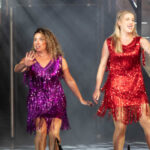
This energetic musical spectacular celebrates some of the biggest hits of the 1980s, featuring tributes to artists including Duran Duran, Madonna, Wham!, Culture Club, Kim Wilde and Bananarama.
With a live band, dancers and more than 35 chart-topping hits, audiences can look forward to an evening packed with familiar favourites.
🎤 Why Not Join a Choir?
World Singing Day isn’t just about watching other people perform.
It’s also the perfect opportunity to consider joining a local choir or singing group.
Community choirs offer opportunities to meet new people, develop musical confidence and enjoy performing together.
Whether your musical tastes lean towards classical, musical theatre, gospel or contemporary pop, there are singing groups catering for a wide variety of interests and abilities.
And remember, you don’t necessarily need any previous singing experience to get involved.
Let the Music Bring Us Together!
Whether you’re attending a concert, singing along to your favourite songs at home or considering joining a choir for the first time, World Singing Day is an opportunity to celebrate something that connects us all.
So this Saturday, why not turn up the music, sing your favourite song and join people around the world in celebrating the joy of singing?
Happy World Singing Day from What’s On In Sutton Coldfield, incorporating What’s On In Lichfield and What’s On In Tamworth!
Please note: The concerts featured are taking place on World Singing Day but are not necessarily officially affiliated with the international celebration. Event information and ticket availability may change.
Joseph and the Amazing Technicolor Dreamcoat – A Technicolor Triumph for Tudor Musical Comedy Society
There are certain musicals that never seem to lose their magic, no matter how many times you see them, and Joseph and the Amazing Technicolor Dreamcoat is undoubtedly one of them.
With its unforgettable songs, infectious humour and uplifting story, Andrew Lloyd Webber and Tim Rice’s much-loved musical has delighted audiences for generations. But to truly bring Joseph to life requires something more than excellent voices and colourful costumes. It demands energy, enthusiasm and an infectious sense of fun.
Tudor Musical Comedy Society delivered all three in abundance.
From the opening notes of Any Dream Will Do to the spectacular finale, this was a production overflowing with talent, personality and sheer theatrical joy.
One of the more unusual aspects of this production was the decision to share the role of Narrator between two performers, Samantha Rogers and Paula O’Hare.
Both possess outstanding voices that complemented one another beautifully, bringing warmth, clarity and personality to the storytelling. Their vocal performances were excellent, but equally impressive was their natural interaction with the children’s ensemble.
With two groups of young performers appearing throughout the week’s run, the group taking part in the performance we attended was the Any Dream Team.
Their enthusiasm was infectious, and the relationship between the children and the narrators created a wonderful sense of fun and spontaneity. Together, they brought the story to life with warmth, confidence and considerable charm.
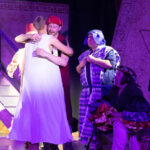
At the heart of the production was Elliot Scott-Lolly as Joseph, delivering a performance that was quite simply brilliant.
From his very first appearance, walking through the auditorium towards the stage while singing Any Dream Will Do, Elliot immediately established a connection with the audience.
It was a lovely opening that set the tone for everything that followed.
Vocally, he was superb, possessing a voice of impressive strength, control and excellent tone, perfectly suited to the demands of the role.
But what made his performance particularly memorable was the sheer energy and enthusiasm he brought to every moment.
Rather than simply playing Joseph, Elliot made the character entirely his own. His confidence, charisma and infectious enjoyment radiated from the stage, drawing the audience into his journey from that opening number right through to the final curtain.
It was a commanding central performance, full of personality and genuine star quality.
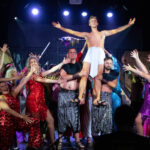
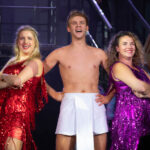
And then there was Dylan Reed as Pharaoh — a performer who, should he ever tire of musical theatre, could undoubtedly enjoy a successful second career as an Elvis Presley impersonator!
His entrance was wonderfully understated, appearing almost demurely, wrapped in a cloak. But that air of restraint lasted only until the opening notes of Song of the King, when Dylan exploded into a performance of tremendous energy, confidence and showmanship.
With a powerful voice, an irresistible stage presence and more than a generous helping of Elvis’s famous hip gyrations, he completely stole the scene.
The audience was utterly captivated, cheering and clapping along as he delivered one of the evening’s outstanding musical highlights. And here’s a little tip for anyone attending: listen carefully about halfway through the song for a wonderfully unexpected burst of Brummie dialect. It’s a delightful touch that brought an extra helping of local humour to an already irresistible performance.
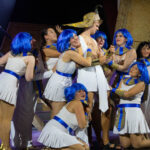
Dylan was also supported superbly by Pharaoh’s Adoring Girls, whose energetic choreography, infectious enthusiasm and rousing backing vocals elevated the entire sequence into a spectacular production number.
Together, they delivered a showstopping performance that was undoubtedly one of the highlights of the evening.
Sam Davis, making his first appearance with Tudor Musical Comedy Society, was perfectly cast as Jacob, the patriarch of this rather extraordinary family.
He brought exactly the right presence to the role, delivering a thoroughly enjoyable performance. On this evidence, one sincerely hopes it won’t be his last production with the society.
Among Joseph’s brothers, Mike Willis as Reuben impressed with his excellent voice and commanding stage presence, while Ade Cox as Simeon delivered another strong performance, particularly in his musical contribution alongside Alex Nash.
Alex is one of those wonderfully versatile performers who seems equally comfortable with whatever a production demands of him.
Whether delivering serious drama, comedy, accomplished dancing or excellent vocals, he brings confidence and conviction to everything he does.
Particularly impressive was the fact that Samantha Rogers, Elliot Scott-Lolly and Alex Nash had all appeared in key roles in Come From Away, which had finished its run just a week earlier. Their ability to move so effortlessly between two very different musicals speaks volumes about their versatility, professionalism and dedication to musical theatre.
Special mention must also go to Charlene Payton as Judah, whose performance of Benjamin Calypso was an absolute delight and one of the evening’s funniest moments.
Charlene demonstrated a wonderful flair for comedy, combining an excellent vocal performance with wonderfully expressive facial reactions, impeccable comic timing and hilarious physical mannerisms. Every gesture and expression added another layer of humour to the number, making it an irresistible piece of musical theatre.
It was a superbly entertaining performance, delivered with tremendous personality and an infectious sense of fun.
As an ensemble, Joseph’s brothers were a delight, working together with an obvious sense of camaraderie and delivering a strong, cohesive group performance.
Their comic timing, vocal contributions and infectious enthusiasm helped bring the production’s wonderfully varied musical numbers to life.
Two particular highlights were the exuberant One More Angel in Heaven / Hoedown sequence and the gloriously downbeat Those Canaan Days.
The former was an explosion of country-and-western-inspired fun, with excellent choreography, spirited performances and an infectious energy that swept across the stage.
In contrast, Those Canaan Days offered a wonderfully theatrical change of mood, with its melancholy humour providing another opportunity for the performers to demonstrate their versatility.
Joined by their wives and the children, the brothers delivered beautifully coordinated dance routines, with enthusiasm and energy filling every corner of the stage.
The choreography was particularly impressive, creating large, lively ensemble sequences that were as enjoyable to watch as they were clearly to perform.
These were moments when the strength of the entire company really shone through, demonstrating that this production was far more than a showcase for its leading performers.
It was a genuine team effort, full of character, humour and tremendous musical spirit.
Behind every outstanding musical production is a creative team whose vision, dedication and attention to detail bring everything together, and this production of Joseph and the Amazing Technicolor Dreamcoat was certainly no exception.
Musical Director Andrew Timmins, who has been associated with Tudor Musical Comedy Society since 2022, has established a strong reputation as both a musical director and conductor.
His passion and dedication were evident throughout the evening, with the excellent orchestra under his direction providing a wonderfully accomplished musical accompaniment. The orchestra brought richness, precision and vitality to the production, effortlessly embracing the show’s remarkable variety of musical styles while maintaining the pace and energy that make Joseph such an entertaining experience.
Making their Tudor debuts were Director and Choreographer Ami Radcliffe and Assistant Director Daisie Macbeth, two talented creatives bringing a wealth of experience and enthusiasm to the production.
Both have backgrounds as performers, and their understanding of musical theatre, combined with an obvious love of the creative process, shone through in the finished production.
Ami’s choreography was particularly impressive, with energetic, imaginative routines that made excellent use of the ensemble, while the overall direction maintained a wonderful balance between humour, storytelling and musical spectacle.
Perhaps the greatest testament to the work of Ami and Daisie was the performance of the cast itself.
From the leading principals to the youngest members of the ensemble, everyone appeared completely invested in the production, delivering performances overflowing with confidence, enthusiasm and enjoyment.
The staging was another example of how thoughtful production decisions can make a considerable difference to the overall theatrical experience.
Rather than relying on elaborate scene changes, the production made excellent use of a largely permanent set, with smaller props and scenic elements introduced or removed as required.
Particularly clever was the decision to dress the stage crew in costume, allowing them to move seamlessly through the action.
The changes were so unobtrusive that you barely noticed them happening, yet everything was exactly where it needed to be when the next scene began.
The costumes were another outstanding feature of the production, bringing colour, character and visual excitement to virtually every scene.
With so many performers taking on multiple roles throughout the show, Wardrobe Mistress Suzanne Harris must surely have been one of the busiest people in the theatre!
The sheer number of costume changes was remarkable, yet everything appeared beautifully coordinated, allowing the production to move effortlessly between its contrasting musical styles and settings.
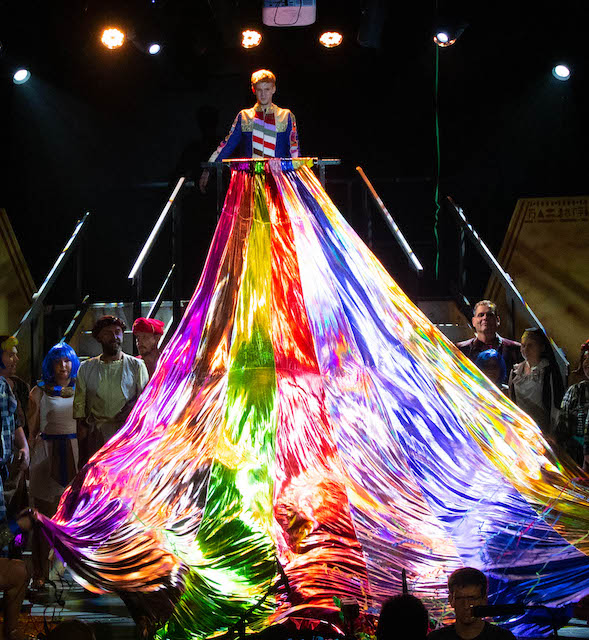
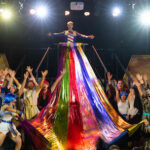
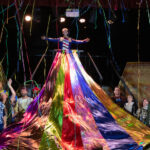
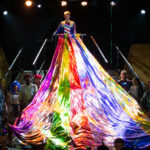
Naturally, Joseph’s magnificent Technicolor Dreamcoat was a visual highlight, particularly during that spectacular final reveal, but there were plenty of other costumes worthy of special mention.
The costumes worn by Pharaoh and his Adoring Girls were especially striking. Their eye-catching blue-and-white designs created a stunning visual spectacle, perfectly complementing the Elvis-inspired musical number and the energetic choreography.
The lighting design was equally impressive, perfectly capturing the colourful, exuberant spirit of Joseph while demonstrating a sensitive understanding of the show’s quieter moments.
Bright, vibrant lighting brought the energetic ensemble numbers to life, while more subdued tones, including atmospheric blue washes during the prison scenes and Those Canaan Days, created an effective contrast and helped establish the changing moods of the story.
Jack and the team at Going Dark Theatrical Services deserve considerable praise for a technically accomplished production that complemented the performances beautifully.
And then came the spectacular finale.
The dramatic reveal of the enormous multicoloured dreamcoat, accompanied by perfectly timed pyrotechnics, provided a breathtaking conclusion to the evening.
It was a wonderful moment of theatrical spectacle, bringing together the colour, excitement and sheer exuberance that had characterised the entire production.
A fittingly dazzling finish to a show that had delivered so much energy and enjoyment from beginning to end.
Having been fortunate enough to see Joseph and the Amazing Technicolor Dreamcoat on numerous occasions, both in Birmingham and London’s West End, including productions featuring some very high-profile performers, I have long considered it one of my favourite musicals.
But if there was one quality that defined Tudor Musical Comedy Society’s production above everything else, it was the sheer enthusiasm and energy radiating from the stage.
Every single performer, from the youngest member of the children’s ensemble to the leading principals, gave absolutely everything.
And the audience responded in kind.
As the show reached its conclusion, the entire sell-out audience rose to its feet in a richly deserved standing ovation, singing, cheering and clapping along in a wonderful celebration of everything they had just experienced.
For me, perhaps the greatest compliment I can pay this production is that the enjoyment didn’t end when we left Sutton Coldfield Town Hall.
The songs were still being sung in our car on the journey home!
That, surely, is the magic of great musical theatre.
A joyous, colourful and wonderfully uplifting production, bursting with talent, energy and infectious enthusiasm. Tudor Musical Comedy Society should be immensely proud of what they have achieved.
CLOC Musical Theatre Company | Royal Sutton Coldfield Town Hall
Our Come From Away review takes us to Royal Sutton Coldfield Town Hall for CLOC Musical Theatre Company’s uplifting production of this remarkable musical.
2026 seems to be turning into the year of discovering musicals I’ve never seen before, and Come From Away is, I believe, the fifth new production I’ve experienced this year.
What a pleasant surprise this one turned out to be!
Given its origins in the events of 11 September 2001, I wasn’t entirely sure what to expect. What I discovered was a wonderfully lively, entertaining and often humorous musical that never loses sight of the extraordinary real-life events at its heart.
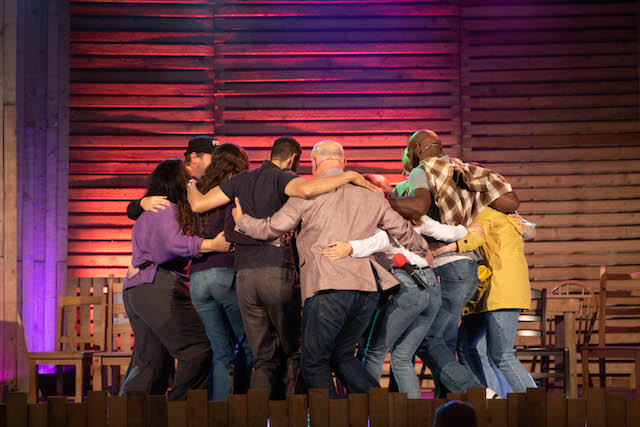
Presented by CLOC Musical Theatre Company at Royal Sutton Coldfield Town Hall, Come From Away tells the true story of what happened in the small Canadian town of Gander, Newfoundland, following the terrorist attacks on America.
When American airspace was closed, 38 aircraft were diverted to Gander International Airport, bringing thousands of unexpected visitors to a community suddenly faced with an extraordinary challenge.
What followed was a remarkable demonstration of generosity, compassion and human kindness as the local residents opened their homes and hearts to complete strangers.
And it is this remarkable story that forms the heart of the musical.
One of the most impressive aspects of this production is the versatility of its cast.
With many performers taking on two or three different characters, the ensemble moves between the residents of Gander and the stranded airline passengers, bringing a whole collection of individual stories to life.
It is a demanding approach to storytelling, requiring performers to switch characters, accents and personalities while maintaining the momentum of the production.
It would be difficult, and perhaps unfair, to single out any one performer in a production where the entire company works so effectively together. Nevertheless, there were several performances worthy of a special mention.
It was particularly lovely to see Teresa Biddell back on stage and singing again for the first time in many years, while Alex Nash and Sam Rogers delivered some wonderful spotlight moments that showcased their vocal talents.
Erin Moody also deserves recognition. Having watched her progress from youth theatre into senior company productions over the years, it is always a pleasure to see that development continue on stage.
And a mention, too, for John Biddell, who brought the character of Gander’s Mayor to life.
These are personal highlights rather than an attempt to rank individual performances. The real strength of Come From Away lies in its collective achievement, with every member of the company contributing to the storytelling, musical numbers and emotional impact of the production.
It is very much an ensemble piece, and CLOC’s cast embraced that challenge beautifully.
One of the most striking aspects of the production is just how much can be achieved with so little.
The entire show takes place on a single set, with tables and chairs providing much of the scenery.
Through clever positioning and movement, these simple pieces of furniture transport the audience between aircraft cabins, the airport and the various locations around Gander.
It is a wonderful reminder that effective theatre doesn’t necessarily require elaborate scenery. Sometimes a talented cast, imaginative staging and a compelling story are more than enough.
A particularly interesting feature is the use of video projections on the rear wall, including footage of real people from Gander whose experiences are represented in the musical.
These moments provide a connection to the actual events, reminding the audience that behind the theatrical performances are real people and genuine stories.
Music plays an essential role throughout the production, with a distinctly Irish and Celtic flavour reflecting Newfoundland’s musical heritage.
The score brings tremendous energy and movement to the storytelling, helping the production shift between moments of humour, uncertainty and emotion.
Rather than stopping the action for conventional musical numbers, the songs are woven into the narrative, allowing the story to unfold with an almost continuous sense of momentum.
Musical Director Chris Corcoran and Choreographer Teresa Biddell deserve recognition for their contributions to the musical energy and movement of the production.
The combination of music, choreography and ensemble performance gives the show a wonderfully lively atmosphere, while never allowing the entertainment to overshadow the story’s more serious origins.
Presented in a single act, with no interval, Come From Away runs for approximately 90 minutes.
The uninterrupted format suits the production particularly well, allowing the audience to follow the developing relationships and experiences without breaking the flow of the story.
Although the musical is rooted in one of the darkest days in modern history, its focus is not on the tragedy itself but on the remarkable response of a community thousands of miles away.
There is plenty of humour alongside the more poignant moments, and an underlying message that feels as relevant today as it did in September 2001.
Director and producer Joyce Eyre deserves considerable credit for bringing this ambitious production to the Sutton Coldfield stage.
In her programme notes, Joyce explains that the original musical was written for 12 principal performers, with those actors also taking on numerous supporting roles.
CLOC expanded the company to 17 performers, allowing additional cast members to become part of the ensemble.
The challenge of creating so many different locations using just 18 chairs and a couple of tables was clearly considerable, but the result demonstrates how effective imaginative direction and confident ensemble work can be.
Joyce also reflects on the challenges of the production, describing it as unlike anything she has worked on in nearly 40 years of amateur theatre.
That experience and commitment are evident in the finished production.
Credit must also go to Going Dark Theatrical Services for the brilliant and atmospheric lighting, Martin Hudson for sound, and the technical and backstage teams, whose work with scenery and projected imagery helps create the changing atmosphere throughout the show.
The entire company, both on stage and behind the scenes, can take considerable pride in what they have achieved.
CLOC Musical Theatre Company has delivered a lively, funny and emotionally engaging production that never forgets its roots or the extraordinary true story behind it.
Congratulations to Joyce Eyre and everyone involved in bringing this remarkable story to Royal Sutton Coldfield Town Hall.
A wonderful reminder that, even in the darkest moments, humanity has the capacity to shine.
Every so often, you walk into a theatre expecting an enjoyable evening and leave having witnessed something truly extraordinary. Last night’s opening performance of Hadestown was one of those occasions.
This ambitious youth theatre production was outstanding in every department. From its remarkable young cast and superb live orchestra to the exceptional choreography, atmospheric lighting and ingenious revolving stage, it delivered an evening of musical theatre that will stay with me for a very long time.
Welcome to Hadestown
Based on the ancient Greek myth of Orpheus and Eurydice, Hadestown tells a tragic tale of love, hope, temptation and sacrifice, weaving together the stories of two very different couples: the young lovers Orpheus and Eurydice, and the troubled marriage of Hades and Persephone.
Guiding us through this world is Hermes, our narrator and companion, who opens the show with Road to Hell and introduces the characters whose lives we will follow.
And what an introduction it was.
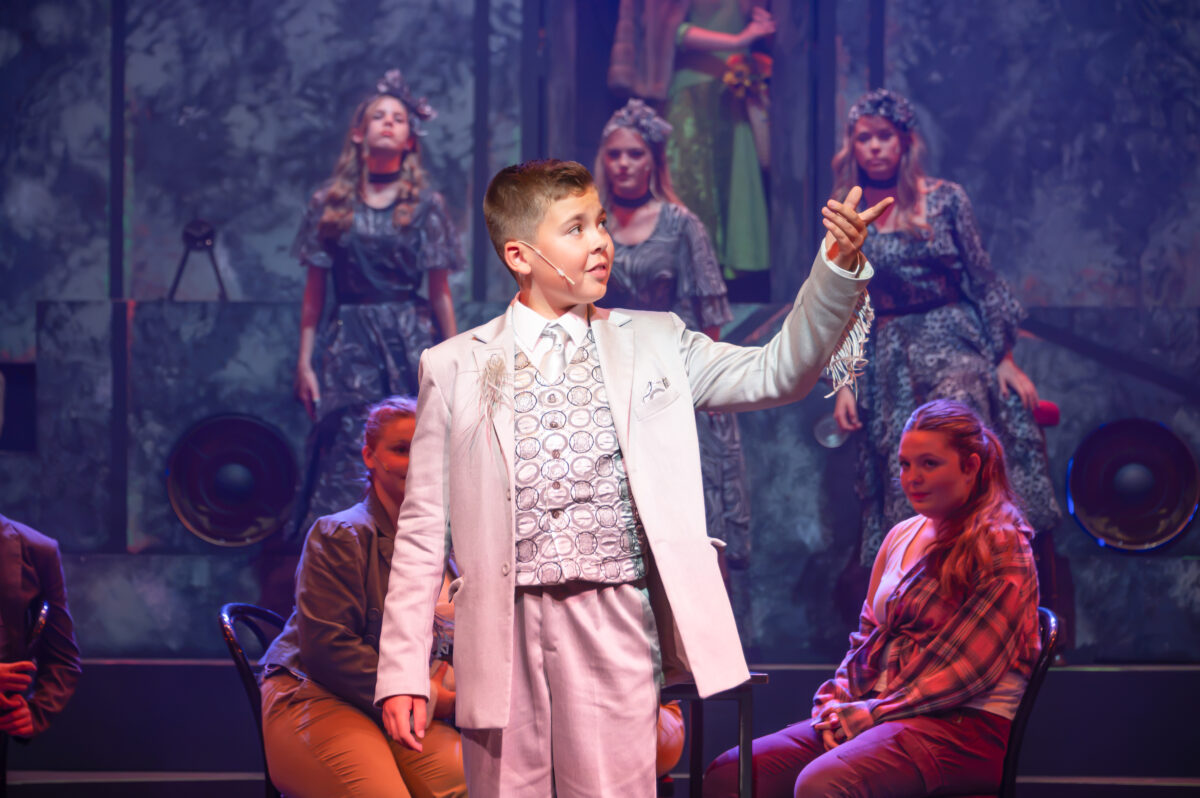
Jack Rowlands, at just twelve years old, was quite simply remarkable as Mr Hermes.
From the moment he stepped onto the stage, he commanded it. His confidence, charisma and natural stage presence belied his age as he broke the fourth wall, drew us into the story and guided us through its unfolding tragedy.
He performed with the heart and assurance of a seasoned entertainer, establishing an immediate connection with the audience that never faltered.
Remember the name Jack Rowlands. I have a feeling we’ll be seeing it in West End programmes before too long.
As Orpheus, JJ Watkins beautifully captured the innocence of a naïve, starry-eyed romantic whose faith in love and the power of music drives the story forward.
Opposite him, Molly Darby gave a deeply affecting performance as Eurydice, a young woman whose independence and resilience mask a desperate need for the simplest things in life: food, warmth and shelter.
Her journey from guarded self-preservation to a growing tenderness towards Orpheus was beautifully portrayed. When circumstances lead her to sign away her soul to Hades, the tragedy of their love becomes all the more poignant.
Together, Watkins and Darby brought genuine emotional depth to these doomed lovers, making the audience invest completely in their journey.
The second half maintained every bit of the first half’s extraordinary standard, beginning with a wonderful performance from Beth Whispear as Persephone.
Her singing was superb, and her increasingly playful, inebriated dancing was a delight to watch. Beneath that exuberance, however, lay a woman desperately trying to hold on to the love she once shared with her husband.
As Hades, Zach Daniels-Sully was commanding. His deep, booming voice perfectly conveyed the character’s strength, authority and power, while his presence brought a formidable weight to the underworld.
The chemistry between Whispear and Daniels-Sully was excellent. Persephone longs to recover their relationship while Hades remains consumed by his own world and nature. When the two eventually reconnect, their dance together is pure poetry — a beautiful moment of tenderness amid the darkness.
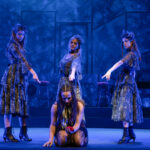
Throughout the story, the three Fates — Imogen Willis, Yohanna Gee and Niamh Mulligan — exert their unsettling influence over gods and mortals alike.Their taunting and manipulation feed the lovers’ doubts and fears.
Their combined voices were hauntingly beautiful, blending exquisitely, while each performer was equally compelling in her solo passages.
Their movement around the stage seemed more like floating than walking, an ethereal quality enhanced by their beautiful costumes. They brought an extraordinary visual and musical beauty to some of the story’s darkest moments.
The company of approximately 25 young performers filled the stage with infectious energy, enthusiasm and remarkable discipline.
The powerful ensemble scenes were choreographed with tremendous precision, using every inch of the performance space. Whether portraying the workers of Hadestown or contributing to the larger musical sequences, the company created a spectacle that was as impressive in its coordination as it was in its vitality.
There was never a sense of young performers merely filling the background. Every member of the company contributed to the world being created before us.
The staging itself was ingenious. Two revolving sections were used to striking effect, particularly during the scenes involving the workers of Hadestown and Orpheus’s journey out of the underworld.
Wafts of smoke rose through the stage, combining with the atmospheric blue and amber lighting to create an almost living, breathing underworld.
The revolving stage was not simply an impressive technical feature; it became an integral part of the storytelling, giving the production movement, momentum and an extraordinary sense of place.
At the helm of this ambitious project, director Richard Poynton delivered an exceptional production.
Bringing together a large young company, demanding musical numbers, intricate staging and a story of considerable emotional depth is no small undertaking. Yet every element felt purposeful, assured and beautifully integrated.
Jessica Bennett’s choreography was nothing short of extraordinary. Considering the sheer weight of ensemble work, the precision and energy achieved by the company were particularly impressive. The movement was never simply decorative; it helped tell the story, creating powerful images and bringing the world of Hadestown vividly to life.
Holding everything together was Oliver Rowe, the company’s Chairman and Musical Director, who also conducted the live orchestra from the keyboard.
His superb musical direction provided the foundation for the evening, allowing the remarkable young voices, demanding choreography and emotional storytelling to work in complete harmony.
The live orchestra added tremendous richness and atmosphere, bringing the score to life and remaining an essential part of the theatrical experience.
The first half was breathtaking. The second was every bit as strong.
I left the theatre having witnessed something truly special — a production filled with energy, heart, imagination and performances that will remain with me long after the final curtain.
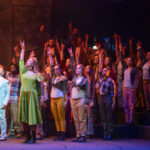
There are certain musicals that need almost no introduction. From the opening notes of The Sound of Music to Do-Re-Mi, My Favorite Things, Sixteen Going on Seventeen, Edelweiss and the magnificent Climb Ev’ry Mountain, Rodgers & Hammerstein created a score that has become part of musical theatre history.
This week those familiar songs return to the Lichfield Garrick as Lichfield Operatic Society celebrates an extraordinary milestone — its 130th anniversary.
Founded in 1896, the Society has remarkably staged The Sound of Music only twice previously, most recently in 2013, making this third production something of a special occasion.
And at the centre of it all is Maria.
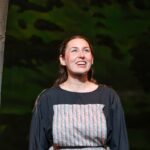
A Maria full of warmth Samantha Hedley takes on one of musical theatre’s most recognisable roles and brings together the qualities Maria needs: warmth, humour, spirit and, crucially, a voice capable of carrying one of Rodgers & Hammerstein’s best-known scores.
Maria’s journey from uncertain postulant to governess and ultimately the emotional heart of the von Trapp family demands considerably more than simply delivering the famous songs. Her relationship with the children needs to feel natural, while her growing feelings for their father gradually change the direction of both their lives.
Hedley’s Maria has a lovely sense of personality about her, particularly in her scenes with the children, where the character’s playful side comes to the fore.
Opposite her, Cameron Morgan takes the role of Captain Georg von Trapp, initially presenting the disciplined, emotionally guarded widower whose seven children are summoned by whistle and expected to behave with almost military precision.
As Maria brings music back into the household, that formality begins to give way to something warmer.
The developing relationship between Maria and the Captain is one of the show’s most important threads, while the Captain’s Edelweiss takes on considerably greater meaning as events outside the von Trapp home begin to threaten everything the family holds dear.
Those wonderful children , Of course, The Sound of Music would be nothing without the von Trapp children — and Wednesday evening featured the youngsters of Team Whiskers.
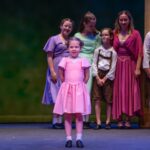
Shannon Robinson leads the siblings as Liesl, with Jude Pick as Friedrich, Rosie Pilling as Louisa, Elliot McDonagh as Kurt, Eva Walters as Brigitta, Dotty Shipton as Marta and Robyn Johnson as Gretl.
Together they bring the energy and sense of family that the production needs.
Choreographer Jemma Tiso-Johnson has plenty to work with in numbers such as Do-Re-Mi and The Lonely Goatherd, and these are precisely the moments when the relationship between Maria and her young charges can really shine.
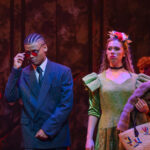
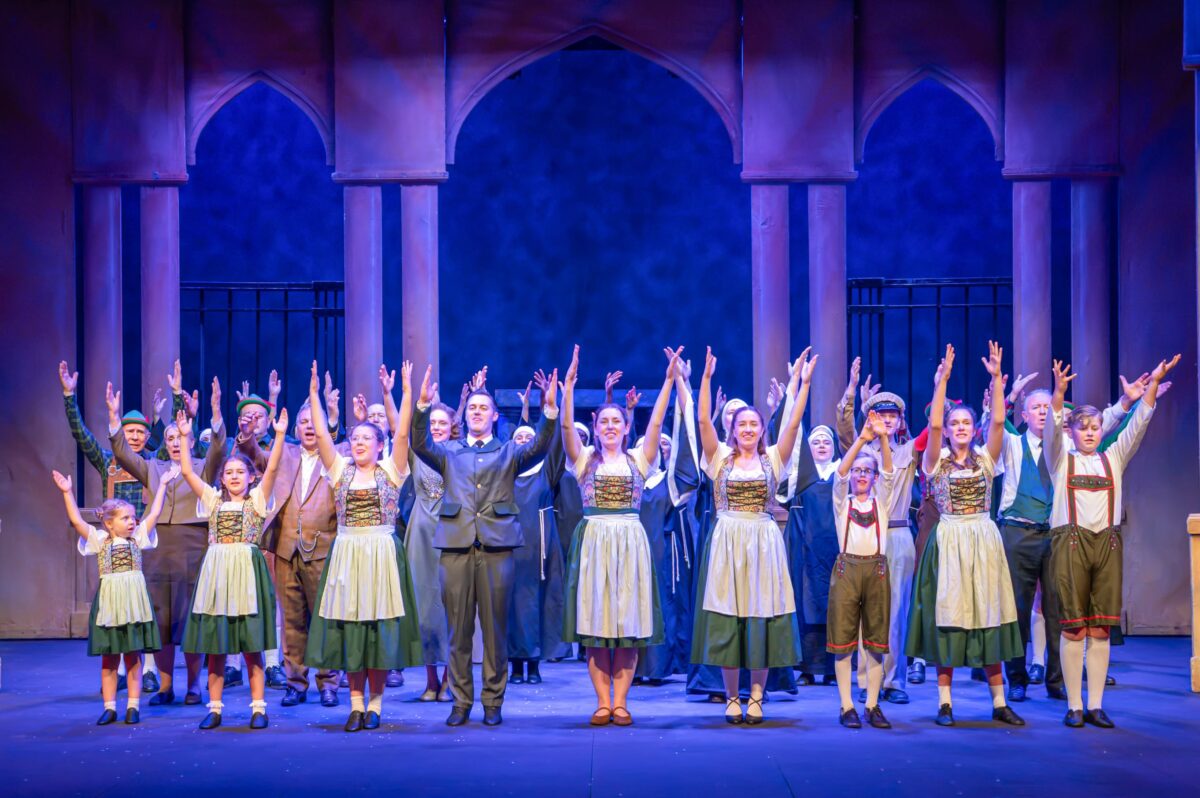
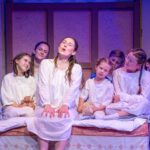
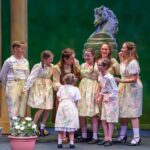
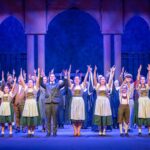
The production photographs capture that particularly well: whether gathered around Maria in their nightclothes or appearing together in their beautifully coordinated outfits, there is a genuine visual sense of this disparate group gradually becoming a family.
And little Gretl inevitably has some scene-stealing opportunities of her own!
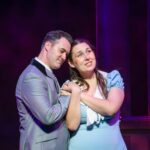
The eldest von Trapp daughter has her own story, and Shannon Robinson’s Liesl shares one of the musical’s most charming numbers with Leo Foëtu-Foster as Rolf.
Sixteen Going on Seventeen initially provides some youthful romance and welcome lightness, but their relationship subsequently becomes entwined with the much darker political events unfolding around them.
That changing atmosphere is one of the reasons The Sound of Music has endured so successfully. What begins as an enormously warm family musical gradually becomes a story about courage, principles and the choices people make when circumstances around them become increasingly threatening.
The abbey scenes provide another of the production’s strengths.
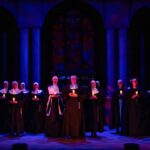
Under David Easto’s musical direction, the nuns establish the musical world of the show from its opening moments, while the production photographs reveal some particularly atmospheric staging, with towering arches, stained glass, candles and carefully controlled lighting creating an impressive setting.
At their centre is Dawn Welch as Mother Abbess, joined by Rebecca Bowley as Sister Berthe, Heather Bustin as Sister Margaretta and Lucy Averis as Sister Sophia.
Their How Do You Solve a Problem Like Maria? brings some delightful humour, but Mother Abbess also gets one of the great musical-theatre moments of the entire evening.
Climb Ev’ry Mountain has become an anthem far beyond the confines of this musical, and its message of having the courage to pursue the life you believe in remains as powerful as ever.
Director Chris Stanley allows the warmth of the von Trapp story to sit alongside the increasingly ominous events surrounding the family.
As Nazi influence tightens around Austria, the carefree atmosphere of the earlier scenes begins to disappear.
Hein Hemke’s Max Detweiler and Kate Pilling’s Elsa Schraeder are inevitably caught up in that changing world, while Captain von Trapp’s refusal to compromise his principles ultimately places his family in danger.
The contrast is important. The songs and humour haven’t disappeared, but suddenly they mean something different.
Music, which initially brought Maria and the children together, becomes symbolic of the family’s identity and unity.
Visually, the production has considerable scale too. The Garrick stage moves between the abbey, the von Trapp home and outdoor settings, while the larger company scenes make excellent use of the available space.
The production photographs also show some striking use of colour and lighting throughout, particularly in the abbey sequences and the large ensemble scenes.
There is another lovely story behind this particular production which seems especially appropriate during Lichfield Operatic Society’s 130th year.
Three generations of the same family are appearing in the show.
On Wednesday evening Rosie Pilling appeared as Louisa, alongside her mother Kate Pilling as Elsa, while Rosie’s grandparents Lynne and Dave Hill appear as Frau Schmidt and Franz.
A musical fundamentally about family being performed by several generations of one real family has a rather wonderful symmetry to it.
And perhaps that’s ultimately why The Sound of Music continues to work.
Yes, there are those glorious Rodgers & Hammerstein songs. Yes, there’s romance, comedy and spectacle. But underneath everything is a story about people discovering what family means — and what they are prepared to do to protect it.
For Lichfield Operatic Society, a company celebrating an astonishing 130 years, this feels like an especially appropriate musical with which to mark the occasion.
A production bringing different generations together, both onstage and behind the scenes, to tell a story that has itself passed from one generation to another.
The hills at the Lichfield Garrick are very definitely alive once again
The Sound of Music runs at Lichfield Garrick until Saturday 19 September, with evening performances at 7.30pm and a Saturday matinee at 2.30pm.
Congratulations to Lichfield Operatic Society on 130 remarkable years — and here’s to the next 130.
There was a definite buzz around Sutton Arts Theatre before the doors had even opened.
This was a sell-out performance, the bar was packed and one question seemed to be hanging in the air:
Will they… or won’t they?
More of that later!
What followed was a fantastic production, packed with warmth, humour and, perhaps most importantly, heart.
From the outset, it was obvious just how much hard work director Emily Armstrong, her production team and the entire cast had put into creating an authentic and affectionate stage version of a story so many of us know and love.
Anyone familiar with the film will appreciate that transferring its distinctive world from screen to stage is no easy task, but Sutton Arts Theatre does it brilliantly. Mark Nattrass’s set design, the costumes, lighting and clever staging transport us straight into the world of mid-1990s Sheffield.
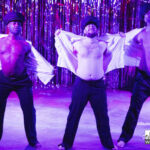
And, of course, all those favourite moments are there — not least the unforgettable Jobcentre queue gradually succumbing to the moves of Donna Summer’s Hot Stuff.
Six Men and One Crazy Idea
One of the most striking aspects of the production is its casting.
The actors may not necessarily look like their big-screen counterparts, but in personality and style they capture the essence of these familiar characters remarkably well. Crucially, though, they never feel like impersonations.
Oliver Farrelly is excellent as Gaz, nailing the brash, cheeky, jack-the-lad exterior while revealing the pain underneath. For all his crazy schemes, Gaz desperately wants to be the best father he can be to Nathan.
That relationship is beautifully portrayed by Freddie Smith as Nathan, who gives an incredibly mature and assured performance. Nathan frequently sees through his dad’s bravado better than anyone, and the partnership between Smith and Farrelly gives the story much of its emotional heart.
Luke Saldana is terrific as Dave, Gaz’s long-suffering friend and former workmate. He captures Dave’s humour and loyalty alongside his deep insecurity about his body and the damage unemployment has done to his pride and self-confidence.
Then there’s Paul Atkins as Guy, who very nearly steals the show.
Guy can’t really dance, can’t sing and has an inexplicable enthusiasm for Singin’ in the Rain — but what he lacks in conventional theatrical talent, nature has apparently compensated for somewhere considerably below the belt!
Atkins embraces every second of it and his audition is one of the biggest comic highlights of the evening.
Jerome Pinnock-Glasgow is an absolute delight as Horse, the oldest member of this unlikely troupe. His breakdancing days may be behind him, but thankfully the Funky Chicken most certainly isn’t! His performance of it is another highlight, delivered with tremendous enthusiasm and the slightly bewildered expression of a man wondering exactly what he has let himself in for.
Ethan Gibson brings real sensitivity to Lomper, finding the perfect balance between the character’s timidity and vulnerability as a troubled young man struggling with his sexuality, loneliness and personal life.
Completing the six is Rob Phillips as Gerald, the former foreman desperately attempting to remain aloof from the men he once managed while hiding an increasingly impossible secret.
Gerald has been unemployed for months, yet still leaves home each morning pretending to go to work because he cannot bring himself to tell his wife. Phillips gives him wonderful charm, gradually revealing a proud man who is rapidly reaching the end of his tether.
Together, the six develop into a wonderfully believable group. What begins as a seemingly ridiculous money-making scheme gradually becomes something much more important — friendship and a way of rediscovering their confidence and dignity.
And the Women Trying to Make Them See Sense…
The women in their lives provide both wonderful comedy and much of the emotional reality behind the story.
Michelle Riley gives a brilliant performance as Mandy, Gaz’s ex-wife and Nathan’s mum. She’s had enough of Gaz’s hare-brained schemes and what she sees as his habit of leading Nathan astray. Riley gives us a terrific mixture of anger, frustration and exasperation while never losing sight of a mother trying to do what she believes is right for her son.
Jayne Lunn is wonderful as Jean, Dave’s increasingly frustrated wife.
Jean knows something is wrong, but Dave’s insecurities prevent him from telling her the truth. Eventually those bottled-up emotions explode in one of the evening’s strongest scenes as Jean confronts him — red thong in hand and with plenty of questions demanding answers!
It’s very funny, but it’s also genuinely moving and perfectly demonstrates the emotional depth beneath the comedy.
And Sarah Stanley is excellent as Linda, Gerald’s slightly snobbish and blissfully unsuspecting wife. While Gerald desperately maintains the pretence that he’s still working, Linda merrily talks of skiing holidays and expensive restaurants without the slightest idea that the money has stopped coming in.
More Than Men Taking Their Clothes Off
And that is ultimately why The Full Monty still works so well.
Beneath the laughs — and eventually beneath the clothes — is a story about people whose livelihoods, confidence and sense of purpose have been taken away.
It deals with unemployment, body image, sexuality, relationships, friendship, fatherhood and dignity. At its heart is the idea that self-worth and human connection can be reclaimed even in the face of economic hardship and despair.
Director Emily Armstrong should be immensely proud of this production. You can see the hours of work and rehearsal that have gone into making something that ultimately looks effortless.
The same applies to Janine Henderson’s choreography.
The Jobcentre sequence is the perfect example. It has to look spontaneous — almost as though those little movements are simply happening — when in reality it takes meticulous choreography and rehearsal to stop it becoming a mishmash. Henderson gets it just right.
And then…
🎩 WILL THEY OR WON’T THEY?
Oh yes.
They do.
The finale is quite simply glorious.
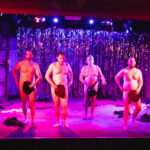
As those opening notes of Tom Jones’ You Can Leave Your Hat On arrive, the anticipation that had been building since before the theatre doors opened finally erupts.
Is every move absolutely perfect?
Perhaps not.
Does it matter? Not one bit.
Because by this point the audience isn’t simply watching a carefully choreographed theatrical number. They’ve been swept up in it.
The noise, laughter, cheering and applause from a packed Sutton Arts Theatre created an extraordinary atmosphere — and, yes, our unlikely heroes ultimately keep their promise and bare all.
As my wife said to me afterwards:
“It was just like being there.”
That sums it up beautifully.
By the end, the audience were on their feet for a richly deserved standing ovation.
Funny, warm, poignant and ultimately joyous, Sutton Arts Theatre’s The Full Monty delivers everything you hope it will — and underneath all the laughter is a surprising amount of heart.
⭐ A fantastic night’s theatre and quite simply a show not to miss.