
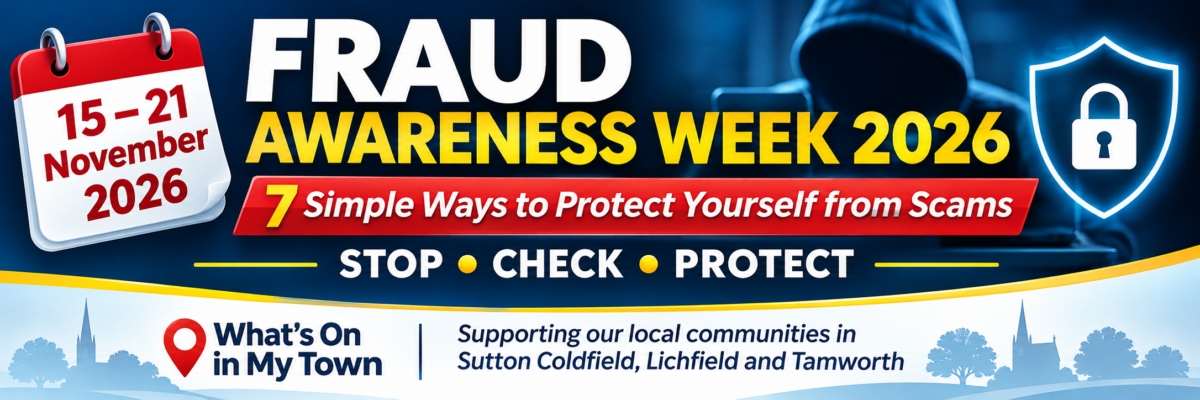
Fraud Awareness Week 2026: Seven Simple Ways to Protect Yourself from Scams
Residents across Sutton Coldfield, Lichfield and Tamworth are being encouraged to stay alert to fraud as International Fraud Awareness Week takes place from 15–21 November 2026.
Fraud can happen to anyone. Whether it’s a suspicious telephone call, a convincing email, a fake delivery message or an online shopping bargain that seems too good to be true, scammers are constantly finding new ways to trick people into handing over their money or personal information.
The good news is that a few simple precautions can make a real difference.
To mark Fraud Awareness Week, What’s On in My Town is sharing seven straightforward tips to help local residents recognise suspicious activity and protect themselves and their families.
Seven Days, Seven Tips
1. Sunday 15 November – Don’t Rush!
Fraudsters often create a false sense of urgency, claiming that your bank account is at risk, a payment is overdue or immediate action is required.
Their aim is to make you panic before you’ve had time to think.
Our advice: Stop, take your time and check the situation independently. Don’t let anyone pressure you into making a financial decision.
2. Monday 16 November – Never Share Your PIN
Your bank will never ask you to disclose your full PIN or online banking password.
Be particularly suspicious of anyone who asks you to reveal security information over the telephone, by email or through a text message.
Our advice: Keep your passwords, PINs and security codes private. Never share a one-time banking verification code with someone who contacts you unexpectedly.
3. Tuesday 17 November – Beware of Suspicious Links
Fake delivery notifications, parking fine messages, tax refund emails and account security alerts are common methods used by scammers.
These messages often contain links to websites designed to steal personal or banking information.
Our advice: Don’t click unexpected links. Instead, visit the organisation’s official website or open its app yourself.
4. Wednesday 18 November – Check Before You Buy
With Christmas approaching, online shopping scams are particularly important to watch out for.
Fraudsters may advertise popular products at unusually low prices, create fake online shops or impersonate genuine retailers.
Our advice: Research unfamiliar sellers, check independent reviews and use secure payment methods that offer buyer protection. Be cautious about paying strangers by bank transfer.
5. Thursday 19 November – Don’t Trust Caller ID
Modern technology allows criminals to disguise telephone numbers, making calls appear to come from banks, police forces or other trusted organisations.
A familiar number on your screen doesn’t necessarily mean the call is genuine.
Our advice: If you’re suspicious, end the call and contact the organisation using a telephone number you’ve independently verified.
6. Friday 20 November – Protect Your Accounts
Using the same password across several websites can put multiple accounts at risk if one service suffers a security breach.
Our advice: Use strong, unique passwords for important accounts and enable two-step verification wherever possible. A reputable password manager can make this easier.
7. Saturday 21 November – Talk About Scams
Fraudsters rely on secrecy, embarrassment and confusion.
Talking openly about suspicious messages and experiences can help prevent others from becoming victims.
Our advice: Share scam warnings with friends, family and neighbours. If you’ve been targeted, don’t feel embarrassed about asking for help.
What Should You Do If You Think You’ve Been Scammed?
If you believe you’ve been the victim of fraud, it’s important to act quickly.
- Contact your bank immediately if you’ve transferred money or disclosed financial details. You can also call 159 to connect with participating banks’ fraud departments.
- Report fraud to Report Fraud, the national reporting service for England, Wales and Northern Ireland, at www.reportfraud.police.uk or by calling 0300 123 2040.
- Forward suspicious text messages to 7726, a free reporting service supported by mobile networks.
- Forward suspicious emails to [email protected], the National Cyber Security Centre’s suspicious email reporting service.
- Call 999 if a crime is happening now or someone is in immediate danger.
Looking Out for Our Communities
At What’s On in My Town, we believe that sharing reliable, practical information is an important part of supporting our local communities.
Throughout Fraud Awareness Week, we’ll be publishing a daily fraud prevention tip across our social media channels, helping residents in Sutton Coldfield, Lichfield and Tamworth stay informed.
Please share these messages, particularly with friends, relatives or neighbours who might benefit from a little extra guidance.
Remember: STOP. CHECK. PROTECT.
Taking just a few moments to question something suspicious could save you considerable worry and financial loss.
What’s On in My Town – Supporting and connecting our local communities.
