
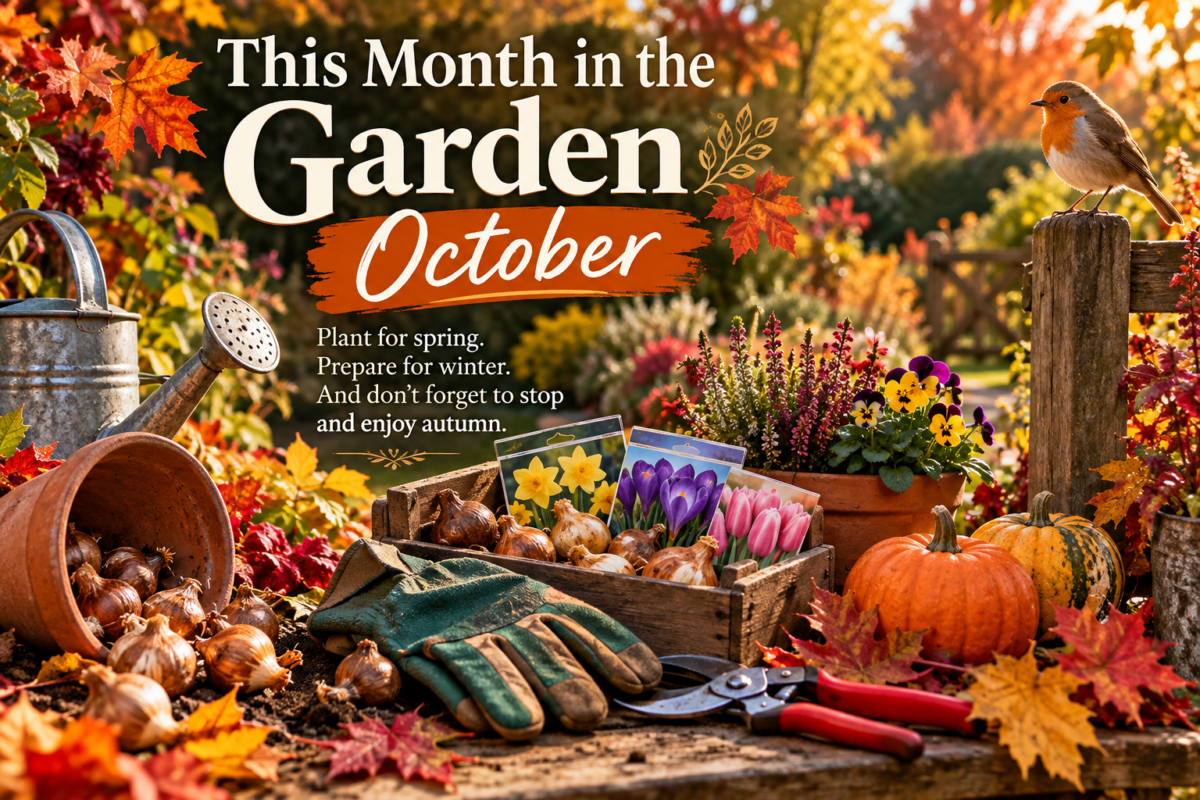
🍂 This Month in the Garden – October
October is one of those wonderful months when the garden seems to change almost daily. Summer colour begins to fade, leaves turn gold, red and bronze, and cooler mornings remind us that winter isn’t very far away.
But don’t put the gardening gloves away just yet. October is an important month for preparing the garden for winter — and for getting a head start on next spring.
🌷 Plant Now for Spring Colour
October is an excellent time to get spring-flowering bulbs into the ground.
Daffodils, crocuses, alliums, hyacinths and other spring favourites can be planted in borders, pots and containers now. They’ll spend the colder months quietly establishing themselves before bursting into life next year.
If you’re planting tulips, there’s no need to rush. They can generally wait until later in autumn, when cooler soil conditions can help reduce the risk of tulip fire disease.
Plant bulbs at roughly two to three times their own depth, unless the packet recommends otherwise, and choose somewhere with good drainage.
A little work now can produce a spectacular display next spring. 🌷
🍁 Don’t Throw Those Leaves Away!
The autumn leaf fall is beginning in earnest, which inevitably means plenty of sweeping and raking.
Remove fallen leaves regularly from lawns, paths and ponds, particularly where wet leaves could become slippery or smother the grass underneath.
But don’t automatically put them all in the garden waste bin.
Collected leaves can be turned into leaf mould, a fantastic natural soil improver. Simply gather damp leaves into a leaf-mould cage or perforated garden sacks and leave nature to do the work.
It takes time, but your garden will thank you for it.
🌱 Give the Lawn Some Attention
After the wear and tear of summer, October is a good opportunity to give the lawn a little TLC.
Continue mowing while the grass is actively growing, but gradually raise the cutting height. Rake out heavy thatch or moss if necessary and aerate compacted areas with a garden fork.
Bare or worn patches can still be repaired while conditions remain mild, and an autumn lawn feed can help strengthen the grass ahead of winter.
And keep fallen leaves off the lawn — a thick wet covering can quickly damage the grass underneath.
✂️ Tidy – But Don’t Tidy Too Much!
It can be tempting to give the entire garden a huge autumn clear-out.
Resist the temptation!
Remove obviously diseased material and anything that’s collapsed across paths, but consider leaving some seed heads, hollow stems and areas of natural cover in place.
They can provide valuable food and shelter for birds, insects and other wildlife through the colder months.
Those frosted seed heads can also look rather beautiful on a crisp winter morning.
Sometimes a slightly untidy garden is a healthier garden. 🐝🦔
🌿 Look After Tender Plants
October nights can suddenly become chilly, so keep an eye on the forecast.
Tender plants in containers can be moved into a greenhouse, conservatory or another sheltered frost-free position. Plants that need to remain outside may benefit from horticultural fleece or additional protection around their pots.
It’s also worth raising containers slightly onto pot feet or bricks so excess water can drain away during wetter weather.
Cold is one problem — sitting in water all winter is another.
🌸 Divide and Move Perennials
With the soil still retaining some warmth from summer, October can be a useful time to divide established herbaceous perennials that have become overcrowded.
Dividing plants can rejuvenate older clumps and, even better, give you extra plants for other parts of the garden.
It’s also a good time to move many established plants while the soil is moist and they’re entering their dormant period.
Free plants? We like those. 😂🌿
🧄 October in the Vegetable Garden
There’s still plenty happening on the vegetable plot.
Harvest remaining crops as they’re ready and clear away spent plants, particularly anything showing signs of disease.
October is also a traditional time for planting garlic, while suitable overwintering onion sets can go in too.
Empty beds can be mulched with well-rotted organic matter, allowing winter weather and worms to gradually work it into the soil.
🐦 Remember the Wildlife
As natural food sources begin to disappear, our garden visitors increasingly appreciate a helping hand.
Clean bird feeders and bird baths regularly and continue providing fresh water and suitable food.
Leave a few sheltered corners around the garden too. Log piles, leaves beneath hedges and undisturbed areas can provide valuable winter homes for insects and other wildlife.
If you’re fortunate enough to have hedgehogs visiting, always check piles of leaves and garden material carefully before disturbing or disposing of them. 🦔
🪴 Pots, Baskets & Containers
Summer containers may finally be reaching the end of their display, but they don’t have to remain empty.
Replace tired summer bedding with autumn and winter plants such as violas, pansies, cyclamen, heucheras and small evergreen plants, depending on the conditions in your garden.
Add some spring bulbs underneath and you’ll get another burst of colour when winter begins to retreat.
🧹 One Last October Job…
Before winter really arrives, take a little time to clean and inspect your garden tools.
Remove soil from spades, forks and hand tools, sharpen secateurs where necessary and lightly oil metal surfaces before storing them somewhere dry.
Future-you will be very pleased when everything is ready to go next spring!