
Be Prepared, Not Scared – Your 72-Hour Emergency Kit
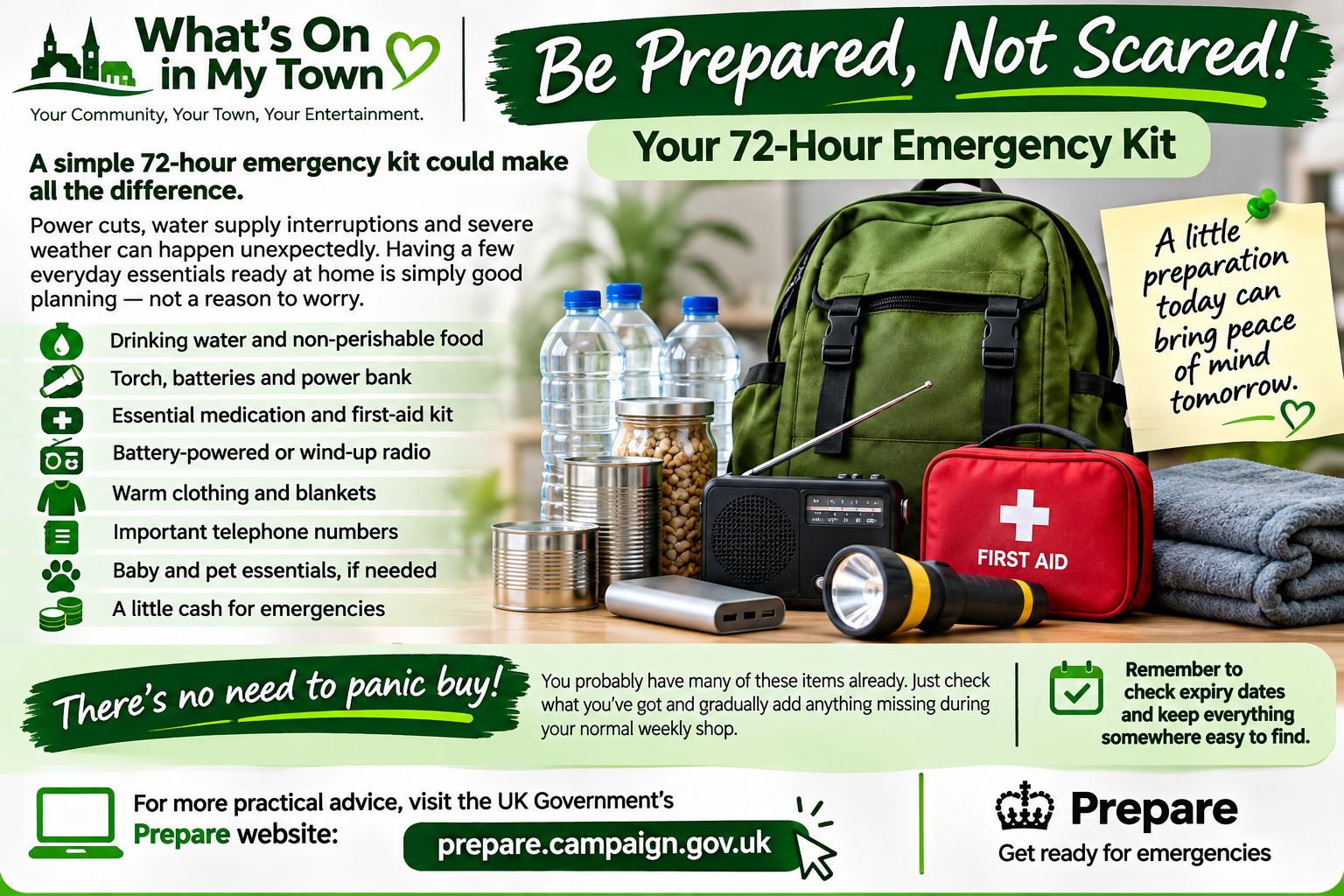
A little preparation can make a big difference when the unexpected happens.
Emergencies don’t always mean major disasters. Sometimes it’s something as ordinary as a power cut, a burst water main, heavy snowfall or a temporary interruption to essential services.
Having a few basic supplies available at home can make those situations easier to manage.
The idea of a 72-hour emergency kit is simple: keep enough everyday essentials to help your household manage for up to three days if normal services are temporarily disrupted.
There’s absolutely no need to panic buy or start stockpiling. Most households will already have many of the things they need.
What should you include?
Drinking water: Keep a supply of bottled water for drinking and basic needs.
Food: Tinned goods, cereal bars, crackers and other non-perishable foods that require little or no cooking.
Lighting: A battery-powered torch and spare batteries.
Communication: A charged power bank and a battery-powered or wind-up radio.
Medication: Essential medicines, prescriptions and a basic first-aid kit.
Warmth: Blankets, warm clothing and spare socks.
Personal essentials: Toiletries, hygiene products and any necessary baby supplies.
Pets: Food, water and essential medication for your animals.
Useful information: Important telephone numbers written down and a small amount of cash.
Build your kit gradually
You don’t need to purchase everything at once.
Start by looking around your home. You may already have spare batteries, a torch, tinned food and warm blankets.
Add anything missing to your usual shopping list over the coming weeks.
Keep your supplies somewhere accessible, and periodically check batteries, medication and food expiry dates.
Remember your neighbours
Preparedness is also about looking after one another.
An elderly neighbour, someone living alone or a person with additional needs might appreciate a friendly check-in during a prolonged power cut or severe weather.
A little community spirit can go a long way.
No cause for alarm
Preparing an emergency kit doesn’t mean an emergency is expected or imminent.
It’s simply a practical precaution, much like keeping a first-aid kit at home or checking your smoke alarms.
For further official guidance, visit the UK Government’s Prepare website:
https://prepare.campaign.gov.uk/
Be prepared, not scared. A little planning today can make tomorrow easier.
What’s On in My Town – Your Community, Your Town, Your Entertainment.

